Lecture 5: The Day the World Went Away
[W]ell, maybe you’ll have seen some of Doré’s pictures of sinners in hell. But Doré couldn’t include the sounds, the sobbing, the murmurous moaning, and occasionally a forlorn cry.
William Masen in The Day of the Triffids (14; ch. 1)
Some administrative matters
- We have now taken enough quizzes that I have a basis for providing tentative grade evaluations for you.
- It is always OK to email me and ask me what your current grade is.
- There are some new documents on the course website:
- Paper topics, grading rubric
- Let’s take a vote on 28 Days Later at the end of class.
… and the idea of everyday life
Horror has two central elements:
- an appearance of the evil supernatural or of the monstrous (this includes the psychopath who kills monstrously); and
- the intentional elicitation of dread, visceral disgust, fear, or startlement in the spectator or reader. (Nickel 15)
Although these reactions may be unpleasant and it may be puzzling to some people why I should ever wish to experience them, they are not desensitized reactions. On the contrary, the reaction to terror appears on its face to be a morally engaged reaction.
(16)
[H]orror's bite is explained …
… as a sudden tearing-away of the intellectual trust that stands behind our actions. Specifically, it is a malicious ripping-away of this intellectual trust, exposing our vulnerabilities in relying on the world and on other people. […] [H]orror puts forward scenarios that through their vivid depiction threaten our background cognitive reliance on others and the world around us.(Nickel 28)
Horror provides three epistemological insights
[T]he intellectual backing for our practical trust, consisting in the various background beliefs we have that our environment (natural and social) will behave in regular ways, cannot be made perfectly certain.
[W]e can still go on, even in the absence of perfect certainty.
[T]he construction of the everyday is necessary.
(Nickel 28-29)
So why do I belabor this point about horror?
[H]orror gives us a perspective on so-called common sense. It helps us to see that a notion of everyday life completely secure against threats cannot be possible, and that the security of common sense is a persistent illusion. […] [T]he idea of security in the everyday is based on an intellectually dubious but pragmatically attractive construction.(Nickel 17)
The crucial point is that the viewer is not in a position rationally to refuse the scenario of the film as impossible, and that the paranoid scenario thus threatens to annihilate the viewer.(20)
In other words ...
- Post-apocalyptic fiction does many of the same things that horror fiction does
- And it often in the same ways, even when it does not overlap with the horror genre explicitly.
Horror often dramatizes the ordinary or everyday world gone berserk and the transmogrification of the commonplace.
(Nickel 18)
- Among other things, post-apocalyptic fiction and horror fiction share a capacity to throw our unquestioned background assumptions into relief and to help us to think about them explicitly.
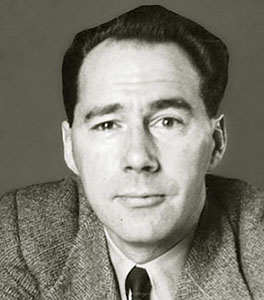
John Wyndham Parkes Lucas Beynon Harris (1903-1969)
- Probably best known for The Day of the Triffids (1951).
- Published prolifically in the science fiction (or
logical fantasy
) genre under various combinations of elements of his long name.
The Day of the Triffids
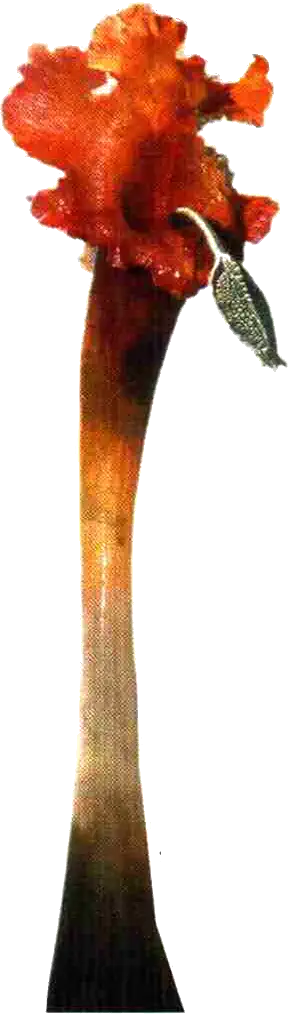
- A defining characteristic of Wyndham’s fiction is
the manipulation of one fundamental element that introduces chaos into an organised society and culminates in the decimated civilisation making a desperate attempt to reinvent itself and survive.
(Mark Slattery,Down on Triffid Farm
) With its psychological interest in how ordinary people react to extraordinary situations, and its air of cold war anxiety, the novel [Day of the Triffids] is characteristic of much of Wyndham's mature work.
(Alastair Horne, Literature Online biography of Wyndham)
Post-apocalyptic thematic concerns
- The world in its everydayness, its (social) construction, and its precarity.
But then [before the
Great Catastrophe’] there was so much routine, things were so interlinked. Each one of us so steadily did his little part in the right place that it was easy to mistake habit and custom for the natural law.
(12; ch. 1)Triffids were, admittedly, a bit weird—but that was, after all, just because they were a novelty. […] The bat was an animal that had learned to fly; well, here was a plant that had learned to walk—what of that?
(29; ch. 2)Josella:
You know, one of the most shocking things about it is to realize how easily we have lost a world that seemed so safe and certain.
(93; ch. 6)Josella:
[T]hose of us who get through are going to be much nearer to one another, more dependent on one another, more like—well, more like a tribe than we ever were before.
(104; ch. 7)
Post-apocalyptic thematic concerns
- Value, and the presuppositions that go into our systems of valuing.
Wha's good of living blind's a bat?
(17; ch. 1)
(55; ch. 4)Anybody who has had a great treasure has always led a precarious existence,
she [Josella] said reflectively.[M]y existence simply had no focus any longer. My way of life, my plans, ambitions, every expectation I had had, they were all wiped out at a stroke, along with the conditions that had formed them. (46; ch. 3)
Post-apocalyptic thematic concerns
- Often, a specific concern is the relative nature of ethical judgments.
Bill:
Put like that, there doesn’t seem to be much choice, does there? And even if we could save a few, which are we going to choose? And who are we to choose? […] Do we help those who have survived the catastrophe to rebuild some kind of life? Or do we make a moral gesture which, on the face of it, can scarcely be more than a gesture?
(85; ch. 6)Dr. Vorless:
We must all see, if we pause to think, that one kind of community’s virtue may well be another kind of community’s crime; that what is frowned upon here may be considered laudable elsewhere; that customs condemned in one country are condoned in another.
(98; ch. 7)
Post-apocalyptic thematic concerns
- Evidence and consequence – and how causes result in effects.
Certainly they [the triffids] were not spontaneously generated, as many simple souls believed. Nor did most people endorse the theory that they were a kind of sample visitation – harbingers of worse to come if the world did not mend its ways and behave its troublesome self. Nor did their seeds float to us through space as specimens of the horrid forms that life might assume upon other, less favored worlds […] My own belief, for what that is worth, is that they were the outcome of a series of ingenious biological meddlings – and very likely accidental.
(20; ch. 2)[A] tall, elderly, gaunt man with a bush of wiry gray hair […] was holding forth emphatically about repentance, the wrath to come, and the uncomfortable prospects of sinners. Nobody was paying him any attention; for most of them the day of wrath had already arrived.
(43; ch. 3)
Post-apocalyptic thematic concerns
- What it means to be human, and how the human is separated from
the natural.
Coker:
God almighty, aren’t you people human?
(81; ch. 6)Bill:
I had the feeling that it was all something too big, too unnatural really to happen.
(70; ch. 5)Dr. Vorless:
I would ask you to consider very carefully whether or not you do hold a warrant from God to deprive any woman of the happiness of carrying out her natural functions.
(101; ch. 7)Alf:
Triffids, huh! Nasty damn things, I reckon. Not natcheral, as you might say.
(110; ch. 8)
(121; ch. 8)Bloody unnatural brutes,
said one.I always did hate them bastards.
Commander Torrance: Feudalism is
the obvious and quite natural social and economic form for that state of things we are having to face now.
(222; ch. 17)
Thematic concerns to discuss on Monday
- Practicality and
realism.
- Social (re-)organization.
- The re-production of implicit, theoretical, and practical knowledge.
- Balance and precarity.
- The (social) production of space.
So, what do we want to do about 28 Days Later?
Media credits
- The title slide includes an engraving from Gustav Doré’s illustrations for a translation of Dante Alighieri’s Inferno, which engraving is now out of copyright. Source.
- A partial still used from the BBC film adaptation of The Day of the Triffids (slide 9) is under copyright, but has been selected for its value as a teaching tool, and is a low-resolution excerpt from a single frame that not suitable for producing a quality reproduction.
- The photo of John Wyndham (slide 8) is a low-resolution copy being used only as a teaching tool, and is irreplaceable. Source.

